
How is construction monitoring conducted on large-scale Dubai development projects?
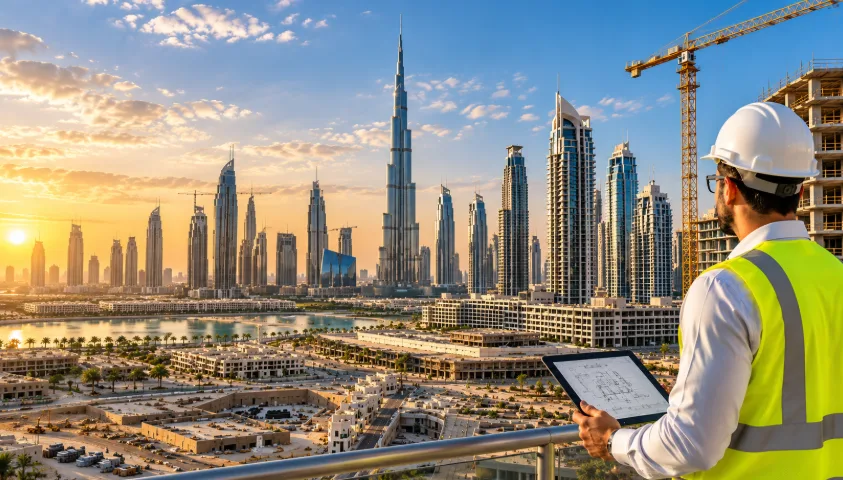
The secret to the success of each large-scale development project in Dubai lies in its construction monitoring process. Rather than simply tracking progress, the construction monitoring process helps stakeholders maintain visibility over project execution from start to finish. As Dubai continues to deliver ambitious residential, commercial, hospitality, and infrastructure developments, effective monitoring plays a vital role in minimizing delays, controlling costs, and supporting successful project outcomes. Through a combination of structured reviews, site-based verification, and ongoing reporting, project stakeholders can gain a clearer understanding of how developments are progressing at every stage. So, through this blog, we will understand how construction monitoring is conducted on large-scale Dubai development projects to get valuable insight into modern project management practices.
Construction Monitoring Process Summary
Construction monitoring provides independent oversight that tracks progress, verifies quality, reviews compliance, and identifies risks throughout large-scale Dubai developments. The process includes initial project reviews, regular site inspections, milestone verification, quality and regulatory checks, and detailed reporting supported by technologies like drones and digital platforms. Independent monitoring helps lenders, investors, and developers improve transparency, control costs, reduce delays, strengthen decision-making, and support successful project delivery.
What is Construction Monitoring and Why it Matters in Dubai
Construction monitoring is a structured reporting and oversight process that provides stakeholders with an independent view of construction performance throughout a project's lifecycle. As a form of project monitoring, it focuses on documenting completed work, reviewing contractor execution, and recording site conditions through regular inspections and technical reviews. However, its importance extends beyond project reporting. In Dubai's large-scale developments, construction monitoring also helps:
- Ensures Compliance with Dubai’s Regulatory Approval Framework,
- Verifies Construction Progress Against Project Milestones,
- Monitors Quality Across Complex Building Systems,
- Provides Early Visibility of Construction Risks,
- Supports Investor, Lender, and Stakeholder Decision-Making,
- Provides built environment consultancy services.
Our construction monitoring specialists help lenders, investors, and developers gain greater control over project delivery through independent oversight, progress verification, and ongoing performance reviews.
Who Appoints a Construction Monitor
Construction monitoring is typically commissioned by stakeholders seeking independent verification of project progress, performance, and delivery throughout. It is most commonly appointed by:
Lenders: Use construction monitors to confirm that the work completed on-site supports the progress claimed by the borrower, providing an independent basis for funding drawdowns. Banks and financial institutions financing under-construction properties often take this further by commissioning an independent Progress Payment Certificate (PPC) verification, where a qualified professional such as Archers inspects the site and cross-checks the contractor’s claimed completion against actual work executed before the next tranche of funds is released.
Investors: Rely on construction monitoring to gain ongoing visibility into project execution, helping them assess whether the development is advancing in line with its planned objectives and delivery strategy.
Developers: Engage construction monitors to obtain an unbiased review of project performance, allowing them to track site progress, evaluate contractor execution, and address emerging issues before they impact delivery.
Key Stages of Construction Monitoring in Dubai Developments
Step 1: Initial Review (Contracts, Programme, Budget, Approvals)
Construction monitoring begins with a review of the project's building contract, approved programme, budget, and funding structure. At the same time, consultants verify Dubai Land Department registration, Dubai Municipality permits, and relevant authority NOCs to establish a clear baseline for monitoring future progress and performance..
Step 2: Periodic Site Visits & Progress Inspections
Once construction is underway, regular site visits are carried out to confirm that reported progress matches the work completed on-site. During these site inspections, monitoring teams review construction sequencing, workforce deployment, material usage, and the status of key work packages to ensure the project is advancing as planned.
Step 3: Progress vs Programme & Drawdown Verification
This is a critical part of construction progress monitoring. After progress has been verified on-site, it is measured against the approved programme and milestone schedule. This helps stakeholders determine whether construction remains on track and whether completed works support the funding drawdowns being requested. For bank-financed projects, this verification often takes the form of a formal PPC (Progress Payment Certificate) review, where an independent consultant confirms that the percentage of work claimed genuinely reflects the physical state of construction, so that funds tied to that milestone are released only against verified progress.
Step 4: Quality & Compliance Checks (As-Built vs Design, DM/RERA Requirements)
As construction progresses, completed works are checked against approved drawings, technical specifications, and applicable regulatory requirements. This process is critical for construction quality control, helping identify any deviations early while ensuring the project continues to meet the standards required for future approvals.
Step 5: Monthly Monitoring Reports & Risk Flags
The findings from site inspections, programme reviews, and budget assessments are then compiled into monthly monitoring reports. These reports provide stakeholders with a clear overview of project performance while highlighting potential risks, such as delays, cost pressures, procurement issues, or contractor-related concerns that may require attention.
Role of Technology: Drones, Time-Lapse & Digital Reporting
Technology helps make construction monitoring more accurate by providing visual evidence that supports site observations. On large construction projects in Dubai, drones are used to capture aerial images, allowing monitoring teams to review construction progress. At the same time, time-lapse cameras create a continuous record of site activity, making it easier to identify productivity patterns or periods of slowed progress. This information is then compiled via digital reporting platforms, which allow stakeholders to review project updates, site imagery, and key findings in a clear, accessible format.
Benefits of Independent Construction Monitoring for Major Dubai Developments
Independent construction monitoring gives an honest, outside view of how a project is really going. It spots problems early, helps control costs, and helps everyone make smart decisions during big Dubai projects.
Common Risks Caught by Construction Monitoring
Through regular inspections and performance reviews, construction monitoring helps identify issues that could affect project delivery, including:
- Schedule Delays,
- Cost Overruns,
- Quality Deficiencies,
- Design and Compliance Deviations,
- Procurement and Material Delays,
- Contractor Resource Shortages,
- Approval and Inspection Bottlenecks.
Conclusion
When it comes to property advice in the UAE, experience is what truly matters. Archers MENA has worked in UAE real estate for over 50 years and holds RICS and ISO certifications. We assist you with property valuations, expert advice, and building checks, and have valued more than 40,000 properties in 15+ countries. Beyond general construction monitoring, our team also conducts independent PPC verification for banks and financial institutions, confirming construction completion status ahead of milestone-linked fund releases on under-construction properties.
Make confident property decisions. Partner with Archers MENA's trusted team for accurate valuations and advisory rooted in local expertise!
FAQ’s About Construction Monitoring in Dubai
How much does construction monitoring typically cost?
Costs depend on project size and how often site visits are needed. Firms usually charge either a percentage of construction value or a fixed monthly fee.
How often are site visits conducted during monitoring?
Site visits usually happen monthly. The exact schedule depends on the project stage and what lenders or investors need for approving fund releases.
Can construction monitoring be started midway through a project?
Yes, it can start anytime. But starting early gives a clearer baseline, making it easier to track budgets, approvals, and progress accurately later on.
What qualifications should a construction monitor have?
A good construction monitor should have technical or surveying experience, ideally RICS-affiliated, along with strong knowledge of UAE construction rules and approval processes.
Is construction monitoring mandatory for all Dubai projects?
It's not required by law for every project. But lenders and investors often ask for it before releasing funds, mainly on large financed developments.
Do banks require PPC verification for under-construction properties?
Yes. Many banks and financial institutions financing off-plan or under-construction properties require an independent Progress Payment Certificate (PPC) verification before releasing milestone-linked payments. A qualified consultant, such as Archers, confirms the property’s actual completion status on-site, ensuring funds are only disbursed against verified progress.
لنناقش متطلبات التقييم
أخبرنا بما تحتاج إلى تقييمه والغرض منه، ونوضح لك أساس التقييم المناسب، وما يتطلبه، والمدة اللازمة لإنجازه.